Flippin Awesome: A Designer's Embroidery Review
As someone who has spent years navigating the intersection of digital Graphics and physical textile creation, I approach every new design file with a critical eye. When I first opened the Flippin Awesome file, my immediate reaction was one of cautious optimism. The description identifies this as a funny kitchen-themed SVG design created by a graphic designer with three years of experience in Adobe Illustrator and Photoshop. While the origin story is straightforward, the real test lies in how this machine embroidery design translates from a flat vector screen to a textured, stitched reality.
First Impressions: Visual Personality and Layout
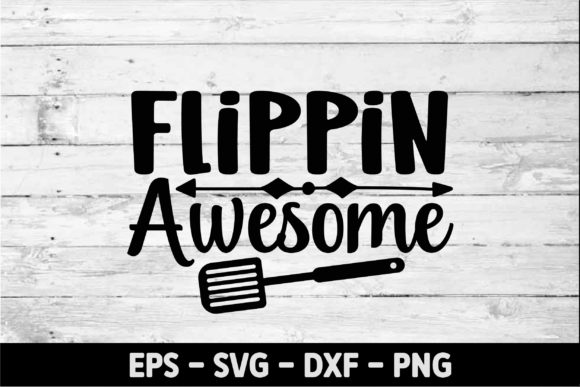
The initial visual impact of Flippin Awesome is undeniably playful. It carries that distinct "funny kitchen" vibe that works exceptionally well for lighthearted home decor or novelty gifts. From a layout perspective, the shape feels balanced, which is crucial when you are planning a hoop size. However, as an experienced reviewer, I immediately looked at the line weights and the complexity of the curves. In Crafts, simplicity often wins when it comes to stitch clarity. If the design relies too heavily on tiny serifs or intricate inner details, those elements can get lost once the needle starts moving.
The mood it creates is cheerful and slightly irreverent, making it perfect for a personalized gift for a friend who loves cooking but also loves a good pun. The visual personality suggests it belongs on items that don't require high-fashion precision but rather character and charm. This makes me think immediately of tote bag design projects or kitchen aprons where the fabric texture can forgive minor imperfections in the fill stitch.
Real-World Application: Testing the Design
To truly understand the value of Flippin Awesome, I imagined a specific scenario: preparing a batch of custom embroidered tote bags for a local craft fair. These bags would be made of sturdy canvas, a fabric that holds up well to embroidery but requires proper tension settings. In this context, the design shines. The bold lines likely translate well into satin stitch borders, providing a clean definition against the natural weave of the canvas.
I also considered using this for sweatshirt embroidery. Here, the challenge shifts. Fleece and cotton blends have more loft, which can distort fine details. If Flippin Awesome contains small text or tight corners, they might blur on a thick sweatshirt. For this reason, I would recommend reserving this design for heavier fabrics like denim or canvas unless you plan to use a heavy-duty stabilizer underneath. The thread colors would need to pop; a dark background fabric with light thread, or vice versa, would maximize the "funny" aspect of the design by ensuring high contrast and readability.
For Etsy sellers and small shop product owners, the versatility of this design is key. It could easily become a staple item for holiday sales. Imagine a set of tea towels featuring Flippin Awesome near the hem. These make excellent holiday embroidery gifts because they are practical yet decorative. The design fits naturally into the category of handmade goods that people buy to add personality to their homes without needing a complete renovation.
Navigating Potential Pitfalls
Despite its appeal, there are areas where caution is required. If you attempt to scale Flippin Awesome down to fit a small cap or a baby onesie, you risk losing the legibility of the text or the humor of the imagery. Small hoop sizes demand simplified designs. Tiny lettering in embroidery file formats can turn into a muddy blob if the stitch density is not adjusted correctly.
Furthermore, working with stretchy fabrics like jersey knit for t-shirts presents a unique challenge. Without the right backing, the design might pucker or warp after washing. Since this is intended for kitchen-related items, frequent washing is a certainty. You must ensure that the stitching is secure enough to withstand hot water and agitation. A loose running stitch or poorly anchored fill could unravel over time, damaging your reputation as a maker. Always check whether the design works for both personal and commercial projects, specifically regarding durability.
Another consideration is the applique design potential. If the design allows for it, turning parts of Flippin Awesome into applique could add depth and texture. However, this requires precise cutting and sewing skills. If the design is purely digitized as a standard stitch-out, stick to flat embroidery techniques to maintain consistency across your finished product.
Practical Notes for the Professional Maker
Before committing to a full production run, I strongly advise testing Flippin Awesome on scrap fabric first. This simple step saves hours of frustration. Check the thread color contrast under different lighting conditions. Does the design look as vibrant in person as it does on your monitor? Review the stitch density closely; areas that are too dense can stiffen the fabric, while sparse areas might show the backing through.
Confirm your hoop size matches the design dimensions exactly. If the file is meant for a 5x7 hoop, do not try to force it into a 4x4 without resizing, as this can distort the aspect ratio. Inspect small details in black and white mockups to see if the shapes hold up without color distraction. Compare how it looks on light versus dark fabric backgrounds to determine the best selling options for your digital product previews.
Always use the proper stabilizer for the specific fabric you are using. Cutaway stabilizers are best for knits, while tear-away works well for wovens. Finally, confirm licensing before selling finished items. As a commercial embroidery asset, understanding what you are allowed to sell is vital for protecting your business. Ensure you have the rights to use this digital embroidery file for custom apparel, embroidered patch creation, or any other craft business venture.
Final Verdict on Flippin Awesome
Flippin Awesome offers a fun, engaging option for makers looking to inject some humor into their handmade product lines. It is particularly well-suited for kitchen textiles, casual wear, and novelty gifts. While it may require some adjustments for delicate fabrics or very small applications, its core design is robust enough for most standard embroidery projects. By following best practices for testing, stabilizing, and licensing, you can turn this design asset into a profitable and popular item in your shop. Whether you are a hobbyist creating a personalized gift or a professional managing a craft business, this design has the potential to bring smiles to your customers' faces.