I Love a Sloths: A Designer's Real-World Review
As someone who has spent years navigating the intersection of digital graphics and physical stitching, I approach every new design with a critical eye. The market is flooded with files that look stunning on a screen but fall apart under the tension of an embroidery machine. When I first encountered I Love a Sloths, my immediate reaction was to separate the hype from the utility. This piece is marketed primarily as a word art vinyl decal cutting file for machines like Cricut Explore and Silhouette, falling squarely into the Crafts and Graphics categories. However, for us in the embroidery world, the question isn't just about cutting vinyl; it is about how this aesthetic translates when we swap the blade for a needle.
The Visual Personality of the Design
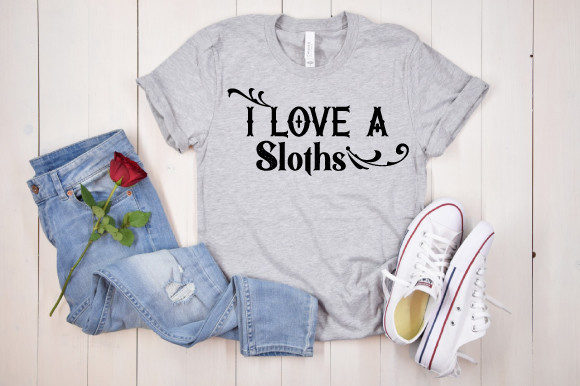
The first impression of I Love a Sloths is one of whimsical charm. The layout relies heavily on typography paired with simple iconography, creating a mood that is lighthearted and universally appealing. In the realm of machine embroidery design, simplicity often wins. Complex, high-detail illustrations can suffer from registration issues or thread bunching, but the clean lines found in this word art style suggest a strong potential for crisp results. The visual personality feels perfectly suited for custom apparel or home decor where a playful message is the focal point. It evokes a sense of slow living and humor, which resonates deeply with current trends in nursery decor and kitchen accessories.
However, because the source material is a digital download intended for paper crafting programs, we must be cautious. The curves in the lettering and the contours of the sloth illustrations need to be evaluated for their stitch path. If the original vector points are too dense, converting them directly into a digital embroidery file without significant editing could result in jagged edges or excessive backtracking. A professional designer knows that what looks smooth in SVG format might require manual node reduction to ensure a fluid running stitch or satin stitch outline.
Testing the Waters: A Kitchen Towel Scenario
To truly understand the viability of I Love a Sloths, let's imagine a real-world scenario. Picture a small shop owner preparing a line of personalized kitchen towels for an upcoming holiday sale. The goal is to create a handmade product that feels boutique-quality yet affordable. The design is placed on a 5x7 inch hoop, centered on a white cotton terry cloth towel. Here, the simplicity of the word art becomes an asset. Unlike a highly detailed portrait, the bold text and simplified sloth shapes would likely hold up well against the textured fabric of a towel.
In this context, the stitch density becomes a critical factor. If the conversion process creates too much fill stitch in the background, the towel will lose its softness and become stiff. A savvy embroiderer would opt for a sparse fill or rely entirely on satin borders to define the shapes. The result? A charming, durable kitchen towel that customers can wash repeatedly without the design cracking or fading. This application highlights why I Love a Sloths works so well for functional items; the design does not overwhelm the utility of the object.
Beyond the Kitchen: Apparel and Patches
Expanding our scope, consider using this design for sweatshirt embroidery or an embroidered patch. On a heavy cotton sweatshirt, the durability of the design is paramount. The thick, rounded letters typical of this style lend themselves well to satin stitching, providing a raised, tactile finish that adds perceived value to the garment. For a personalized gift, such as a baby onesie, the gentle theme fits perfectly. However, here is where the hoop size matters immensely. Baby clothes have limited flat surfaces, and the stretchy nature of knit fabrics requires careful stabilization.
If you attempt to use I Love a Sloths on a curved surface like a baseball cap, you must scrutinize the letter spacing. Curved caps distort straight text, and if the "I Love a Sloths" phrase is too long or tightly kerned, it may warp visually. In such cases, breaking the design into smaller segments or adjusting the arc settings in your digitizing software is essential. Furthermore, for commercial embroidery projects involving patches, the design's clear outlines make it an excellent candidate for applique techniques, provided the file allows for easy separation of the layers.
Pitfalls and Practical Considerations
While the design holds promise, there are specific scenarios where caution is required. First, avoid using this design on thin or sheer fabrics without heavy backing. The weight of the thread, especially if using a dense fill stitch, can cause puckering or even tear delicate materials. Second, dark fabrics present a challenge. The light-colored thread typically used for this type of word art needs a solid base layer to pop. Without proper contrast, the details of the sloth illustrations might get lost, diminishing the visual appeal of the finished product.
Another area of concern is the frequency of washing. If you are creating Etsy listings for everyday wearables, you must ensure the thread colors are colorfast and the knotting is secure. Designs with tiny lettering or intricate corners are prone to snagging over time. Since I Love a Sloths is originally a cutting file, the smallest details might not have been optimized for thread tension. Always test the design on scrap fabric first. Run a black and white mockup to check the balance before committing to expensive thread and premium fabric.
Essential Steps for the Professional Maker
Before integrating I Love a Sloths into your catalog, follow these practical steps:
- Verify Licensing: Since this is a digital download, confirm whether the license covers commercial embroidery sales. Many craft files restrict the number of finished items you can sell.
- Test Stabilizer Choices: Use a cut-away stabilizer for stretchy fabrics like sweatshirts and a tear-away for stable wovens like tote bags or pillow covers.
- Check Stitch Density: Ensure the converted file does not pack stitches too tightly, which can lead to thread breakage or fabric distortion.
- Review Hoop Size Compatibility: Make sure the entire phrase fits comfortably within your machine's working area without needing to re-hoop, which can cause alignment errors.
- Inspect Small Details: Zoom in on the sloth features. Are they large enough to be stitched clearly, or do they risk becoming muddy blobs?
Final Thoughts on Brand Consistency and Value
Ultimately, the decision to use I Love a Sloths comes down to how it aligns with your brand identity. For a small shop product focused on humor, relaxation, or family-oriented themes, this design is a strong contender. It offers a recognizable motif that can drive buyer engagement and enhance the giftability of your inventory. However, success lies in the execution. A poorly digitized version of a great graphic will ruin a garment, while a well-executed version elevates a simple towel into a cherished keepsake.
As designers and makers, our job is to bridge the gap between digital potential and physical reality. By treating I Love a Sloths not just as a file to download, but as a design asset requiring thoughtful adaptation, we ensure that our work stands the test of time. Whether you are creating a boutique branding item or a holiday embroidery gift, the key is to respect the limitations of the medium while leveraging the charm of the design. With the right preparation, this project can indeed become a standout piece in your collection.